

Industrial Roller Coating Equipment Procurement Requires Careful Data Preparation
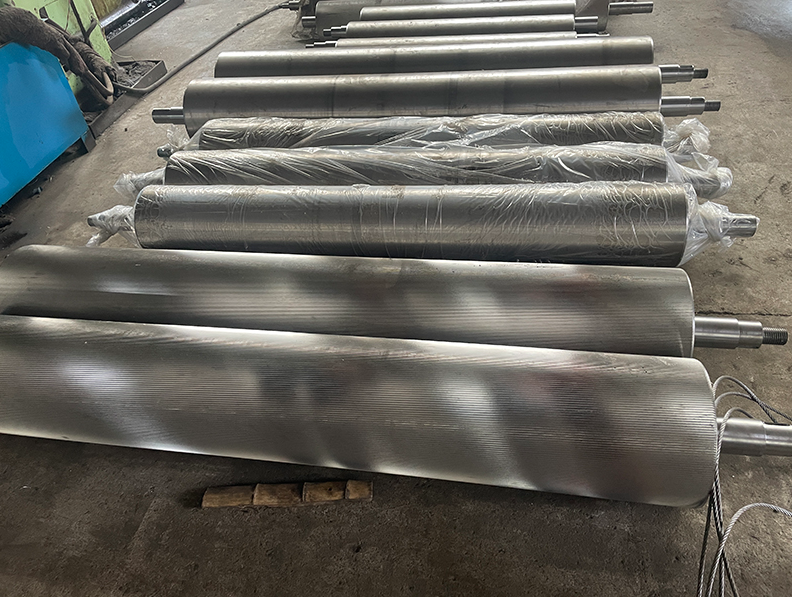
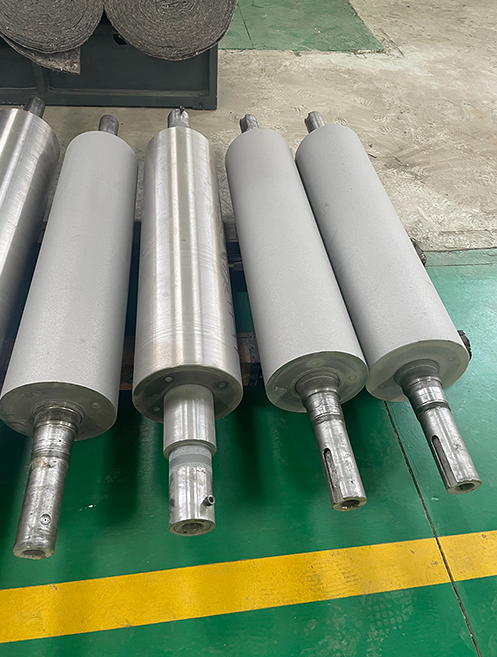
Huasheng manufactures and supplies PVD and DLC coating equipment for companies establishing or expanding their own coating production.
This guide is for roller manufacturers, coating businesses and industrial companies planning an in-house coating line. It explains which data to prepare before requesting an equipment configuration and quotation.
1. Define Your Coating Production Project
Start the enquiry with a clear project description. State whether you are building a new coating line, adding capacity or replacing existing equipment.
Identify the rollers you intend to process and the functions the coatings must provide. Examples include resistance to wear, reduced material pickup or controlled friction. Describe the business requirement as well: monthly output, production scheduling, product consistency or bringing an outsourced operation in-house.
Also explain your existing capabilities. Does your factory already have roller cleaning, surface preparation, lifting equipment and inspection instruments? Which operations will remain outside the proposed equipment purchase?
These details establish the scope of the project. A vacuum deposition machine is one part of a coating production line, and its capacity must be considered alongside the surrounding operations.
2. Provide Roller Drawings, Dimensions and Weight
Prepare drawings for the largest roller and the sizes you expect to process most frequently. Include:
Maximum diameter and overall length.
Effective working face and required coating length.
Journal geometry and available support positions.
Total weight and internal construction.
Areas requiring masking or remaining uncoated.
A roller with a short working face may still have long journals that occupy chamber space. The complete workpiece and fixture must be considered when defining the usable loading arrangement.
For an industrial roller coating equipment enquiry, these drawings help identify requirements for chamber space, handling, support and rotation. They also help establish the distance and orientation between the working surface and deposition sources.
List the expected size range rather than providing only one favourable example. Your most common roller sizes will strongly influence practical loading efficiency.
3. Record Substrate Material and Surface History
Provide the exact material grade, heat treatment, surface hardness and permitted processing temperature. Identify assemblies, joints or internal components that may restrict heating or vacuum processing.
For previously treated rollers, record the existing coating or surface treatment. Include hard chrome plating, nitriding, thermal spraying and any repairs.
This information helps define the preparation requirements for your own production line. Existing layers, cracks, contamination and dimensional damage need assessment before a new deposition process is specified.
Thin PVD and DLC films depend on the supporting substrate and generally follow the underlying surface profile. Deep grooves or substantial wear may require separate repair operations.
When requesting equipment, identify who will perform cleaning, stripping, repair and finishing. Define these operations in the project scope so the quotation and capacity assessment reflect the actual manufacturing workflow.
4. Document Contact Materials and Operating Loads
Specify what the roller contacts during production: metal strip, polymer film, paper, rubber, adhesive, ink or another material. Include grades, formulations, fillers and abrasive constituents where available.
Then record the mechanical operating conditions:
Normal and maximum line speed.
Roller rotational speed and direction.
Applied force and effective contact width.
Web tension and wrap angle where relevant.
Continuous operating time, starts and stops.
Rolling, sliding and known slipping conditions.
Hydraulic gauge pressure alone does not establish the roller contact pressure. Include cylinder dimensions and the loading arrangement if the applied force must be calculated.
These data define the conditions the coating produced by your equipment must withstand. They support discussion of the required deposition technology and coating performance targets.
For traction rollers, specify the required grip. A low-friction coating may be unsuitable where the roller relies on friction to transport material.
5. Separate Service Temperature from Deposition Temperature
Record the measured roller surface temperature during normal production, the peak temperature and the duration of peaks. Include heating and cooling cycles and the measurement location.
The roller’s service temperature and its permitted deposition temperature are separate requirements. The first concerns coating performance in use. The second concerns what the roller material and assembly can tolerate inside the coating system.
When evaluating PECVD DLC coating equipment, discuss the proposed coating structure and deposition conditions against both requirements.
Also provide information about lubricants, process fluids and cleaning chemicals. Include concentrations, exposure temperatures and cleaning frequency.
This operating information helps define the process requirements for the equipment you plan to purchase. Coating suitability still requires validation for the intended application.
6. Set Surface Quality and Dimensional Acceptance Criteria
Provide the required surface roughness before and after coating. Use the parameters and measurement methods specified on your production drawings.
Include diameter tolerances, roundness, cylindricity, radial runout and any functional texture. Identify engraved or patterned features that must retain their geometry.
Coating thickness affects final dimensions. For a uniform film on an external cylinder, the diameter increase is approximately twice the film thickness, before other processing effects are considered.
Define the target thickness, permitted variation along the working face and any final polishing allowance. These requirements help establish process control and inspection needs.
For equipment acceptance, agree on the representative workpiece, loading arrangement and measurement locations. A thickness result from one position should not be treated as evidence of uniformity over the entire roller.
7. Convert Production Demand into Capacity Requirements
Provide the expected number of rollers per month, typical size distribution, target batch quantity and available operating hours. Include expected future demand if expansion is part of the investment plan.
A useful capacity discussion considers the complete cycle:
Preparation and fixture setup.
Loading and pump-down.
Heating, surface activation and deposition.
Cooling and unloading.
Inspection and scheduled maintenance.
The exact sequence depends on the selected process. Cleaning, stripping and polishing may create additional constraints outside the deposition machine.
Ask for an output estimate based on a defined roller family and loading configuration. Chamber dimensions alone cannot establish daily production capacity.
When comparing quotations, check that the same assumptions are being used for cycle time, batch loading and acceptable output. An attractive batch quantity has limited value if it cannot meet the specified coating quality.
8. Document Failure History and Measurable Production Targets
Record the current roller lifetime, cleaning interval and reasons for replacement. Add photographs of wear tracks, buildup, corrosion and product defects.
Use those records to define what your future coating production must achieve. Targets could include a specified surface finish, lower buildup after a defined production quantity or a longer interval between cleaning stops.
Keep equipment acceptance and application performance validation distinct. Equipment checks can establish machine operation and agreed coating results under a defined load. Roller lifetime in service also depends on operating conditions and requires representative production evidence.
Agree on the validation responsibilities, methods and acceptance criteria during the equipment project. Avoid treating a coating hardness figure as a guaranteed service-life result.
Industrial Roller Coating Equipment Enquiry Checklist
Data to prepare Purpose in equipment planning
Project scope and existing facilities Define the machine purchase and supporting operations
Roller drawings, dimensions and weight Assess loading space, handling and fixtures
Material, hardness and treatment history Establish substrate and process compatibility
Contact materials, loads and speeds Define coating performance requirements
Service temperature and permitted deposition temperature Establish thermal requirements
Roughness, thickness and dimensional tolerances Define process control and inspection criteria
Monthly volume, product mix and working hours Assess capacity and production scheduling
Failure records and improvement targets Establish application validation objectives
Request an Equipment Configuration from Huasheng
With the project scope and operating data defined, your enquiry can focus on deposition technology, loading configuration, capacity and equipment integration.
Huasheng supplies PVD coating equipment, PECVD DLC systems and hybrid coating equipment. The appropriate configuration depends on the actual workpieces, required coatings and production plan. Equipment selection should also address installation requirements and the support included in the purchase.
Submit your roller drawings, material specifications, operating conditions and expected output to discuss a coating equipment configuration and quotation for your factory.
Include your available floor space, utilities and planned production schedule so these requirements can be reviewed alongside the proposed system.
Guangdong Huasheng Nanotechnology
Guangdong Huasheng Nanotechnology
Legal Disclaimer:
EIN Presswire provides this news content "as is" without warranty of any kind. We do not accept any responsibility or liability for the accuracy, content, images, videos, licenses, completeness, legality, or reliability of the information contained in this article. If you have any complaints or copyright issues related to this article, kindly contact the author above.
